
Introduction
USB-C rechargeable flashlights are quickly becoming the new standard for outdoor, industrial, and everyday carry lighting.
Compared with traditional AA or AAA battery-powered models, USB-C flashlights offer faster charging, lower long-term costs, and better performance. As USB-C becomes universal across phones, laptops, power banks, and portable devices, more consumers and professional buyers are switching to rechargeable lighting solutions.
From camping and hiking to emergency preparedness and industrial inspection, USB-C rechargeable flashlights are now widely used across multiple industries. In this article, we explain why USB-C flashlights are replacing traditional battery-powered lights and what buyers should consider before choosing a model.
Why USB-C Rechargeable Flashlights Are Becoming More Popular
The growing popularity of USB-C rechargeable flashlights is largely driven by convenience and compatibility. Most modern devices already use USB-C charging, including smartphones, tablets, laptops, and portable power stations. Users no longer want to carry separate chargers or constantly replace disposable batteries.
For outdoor users and professionals, USB-C charging also makes emergency charging much easier. A flashlight can be charged directly from a power bank, vehicle USB port, solar generator, or laptop without requiring additional accessories.
Many modern flashlight brands are also moving toward rechargeable designs because lithium-ion batteries can provide significantly higher output and longer runtime compared with traditional alkaline batteries.
Problems With Traditional Battery-Powered Flashlights
Traditional flashlights powered by AA or AAA batteries still exist, but they come with several limitations that make them less practical for modern users.
Higher Long-Term Cost
Disposable batteries may seem inexpensive initially, but replacement costs increase over time. Frequent users often spend far more on batteries within a few years than the cost of a rechargeable flashlight itself.
Lower Performance
Alkaline batteries struggle to support high-lumen output for extended periods. As battery voltage drops, brightness gradually decreases, resulting in inconsistent performance during use.
Environmental Waste
Disposable batteries create significant environmental waste. Rechargeable lithium-ion systems can replace hundreds of single-use batteries during their lifespan, making them a more sustainable solution.
Limited Convenience
Users must carry spare batteries during outdoor activities, travel, or emergency situations. This becomes inconvenient compared with simply recharging a flashlight through USB-C.
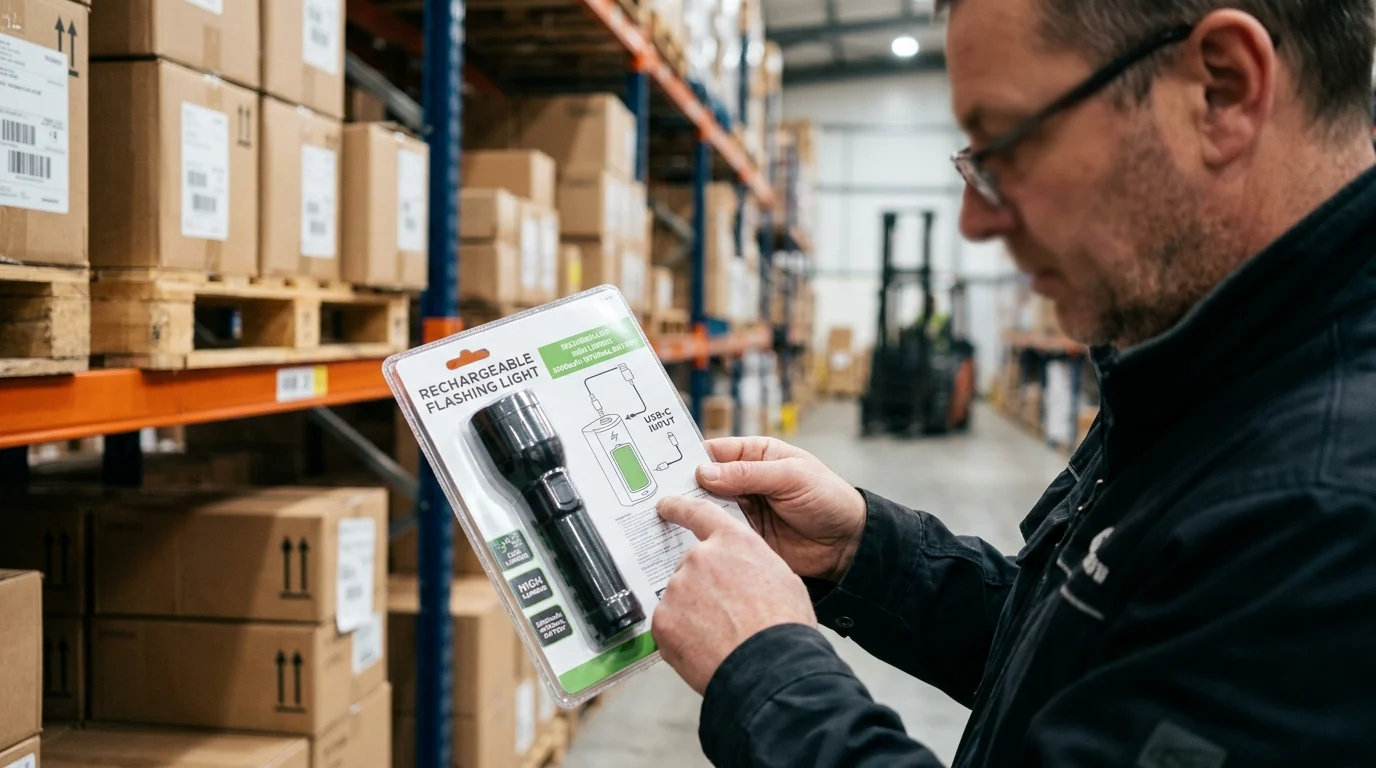
USB-C Rechargeable vs Traditional Flashlights
| Feature |
USB-C Rechargeable Flashlight |
Traditional Battery Flashlight |
| Power Source |
18650 / 21700 Lithium Battery |
AA / AAA Batteries |
| Brightness Output |
1000–5000+ Lumens |
100–600 Lumens |
| Charging Method |
USB-C Charging |
Battery Replacement |
| Long-Term Cost |
Lower |
Higher |
| Runtime Stability |
Stable Output |
Gradual Dimming |
| Environmental Impact |
Lower Waste |
High Battery Waste |
| Outdoor Convenience |
Excellent |
Moderate |
| Emergency Charging |
Supported |
Not Supported |
What Buyers Should Look for Before Purchasing
Not all USB-C rechargeable flashlights offer the same quality or performance. Buyers should carefully evaluate several key factors before purchasing.
Battery Type
Most modern rechargeable flashlights use either:
- 18650 lithium-ion batteries
- 21700 lithium-ion batteries
21700 batteries generally provide longer runtime and higher power output.
USB-C Fast Charging Support
Some flashlights support USB-C Power Delivery (PD) fast charging, while others only support standard charging speeds. Fast charging can significantly reduce downtime.
Waterproof Rating
For outdoor or industrial applications, buyers should choose products with at least IPX7 or IP68 waterproof ratings.
Brightness and Runtime Balance
Extremely high lumen output is useful, but runtime and thermal control are equally important. Well-designed flashlights use smart temperature regulation systems to prevent overheating.
Safety Protection
Quality rechargeable flashlights should include:
- Overcharge protection
- Over-discharge protection
- Short-circuit protection
- Temperature management systems
Supplier Certifications
For wholesalers, importers, and distributors, certifications are essential. Reliable manufacturers should provide:
- CE certification
- RoHS certification
- FCC certification
- UN38.3 battery transport certification
Are USB-C Rechargeable Flashlights Worth It in 2026?
For most users, the answer is yes.
USB-C rechargeable flashlights offer a better balance of performance, convenience, runtime, and long-term value compared with traditional battery-powered models. As USB-C becomes the standard charging interface across consumer electronics, rechargeable flashlights naturally fit into modern charging ecosystems.
Whether for camping, emergency kits, industrial inspection, security work, or everyday carry, USB-C flashlights provide a more practical and efficient solution for modern users.
As battery technology and charging systems continue to improve, traditional disposable battery flashlights will likely become less common in both consumer and professional markets.