
How to Find a Reliable OEM Solar Light Manufacturer in China
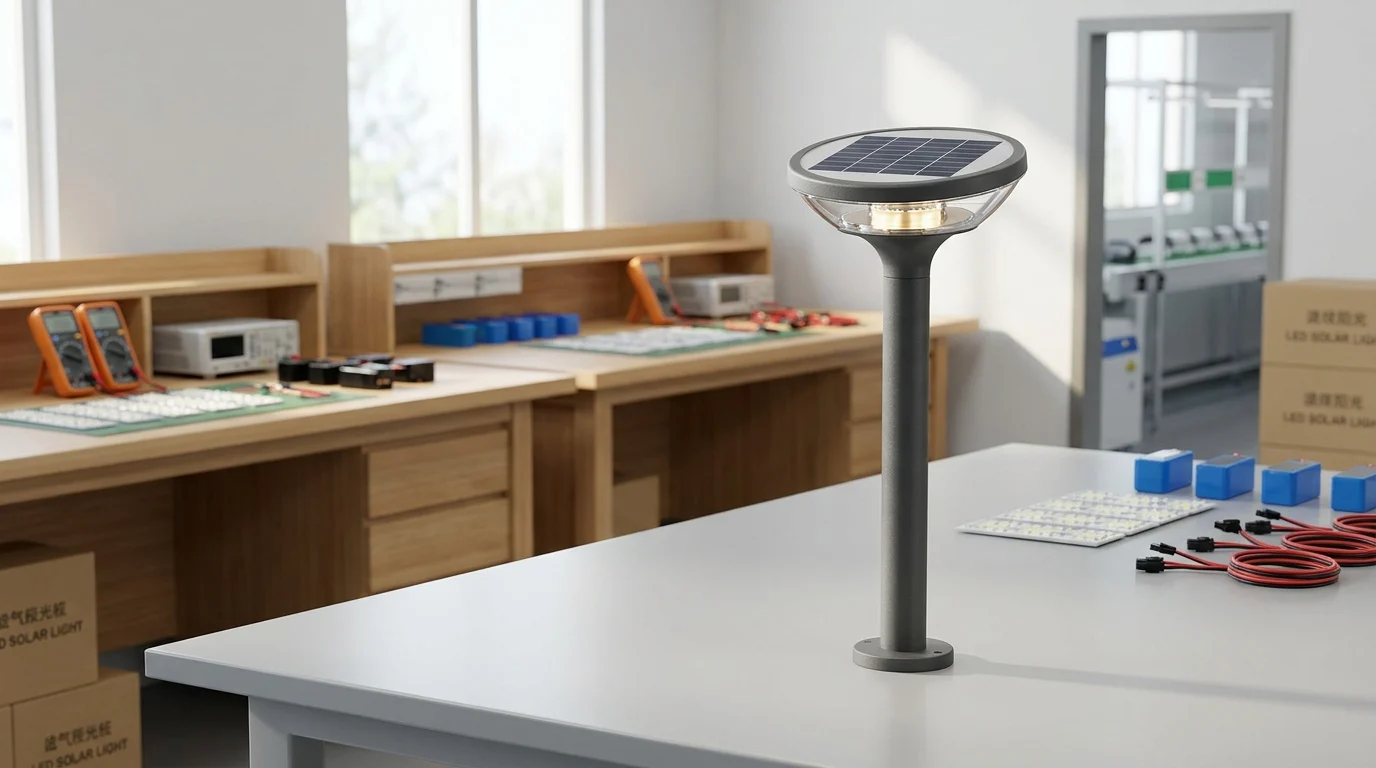
Introduction
Choosing the right solar light manufacturer in China directly affects product quality, delivery stability, warranty support, and your long-term business reputation. While thousands of suppliers offer OEM solar lighting products, not every company has real manufacturing capabilities, strict quality control systems, or reliable after-sales support.
For importers, distributors, wholesalers, and outdoor lighting brands, the challenge is not simply finding the lowest price. The real goal is finding a factory that can consistently deliver stable product quality, support OEM customization, and scale production as your business grows.
In this guide, we will explain how to evaluate a reliable OEM solar light manufacturer, what certifications and product tests matter most, and which warning signs buyers should avoid before placing bulk orders.
Why Choosing the Right Solar Light Factory Matters
China remains one of the world’s largest manufacturing hubs for solar lighting products. From solar wall lights and solar flood lights to commercial outdoor lighting systems, many global brands rely on Chinese factories for OEM and ODM production.
However, supplier quality can vary significantly.
Some companies operate real production facilities with engineering teams, automated assembly lines, and strict quality inspection systems. Others are simply trading companies that outsource production to multiple small workshops with inconsistent standards.
Choosing the wrong supplier may lead to:
- Unstable product quality
- Waterproof failures
- Battery performance issues
- Delayed shipments
- Certification problems
- High customer return rates
- Warranty disputes
For long-term business growth, working with a reliable manufacturer is usually more important than getting the cheapest quotation.
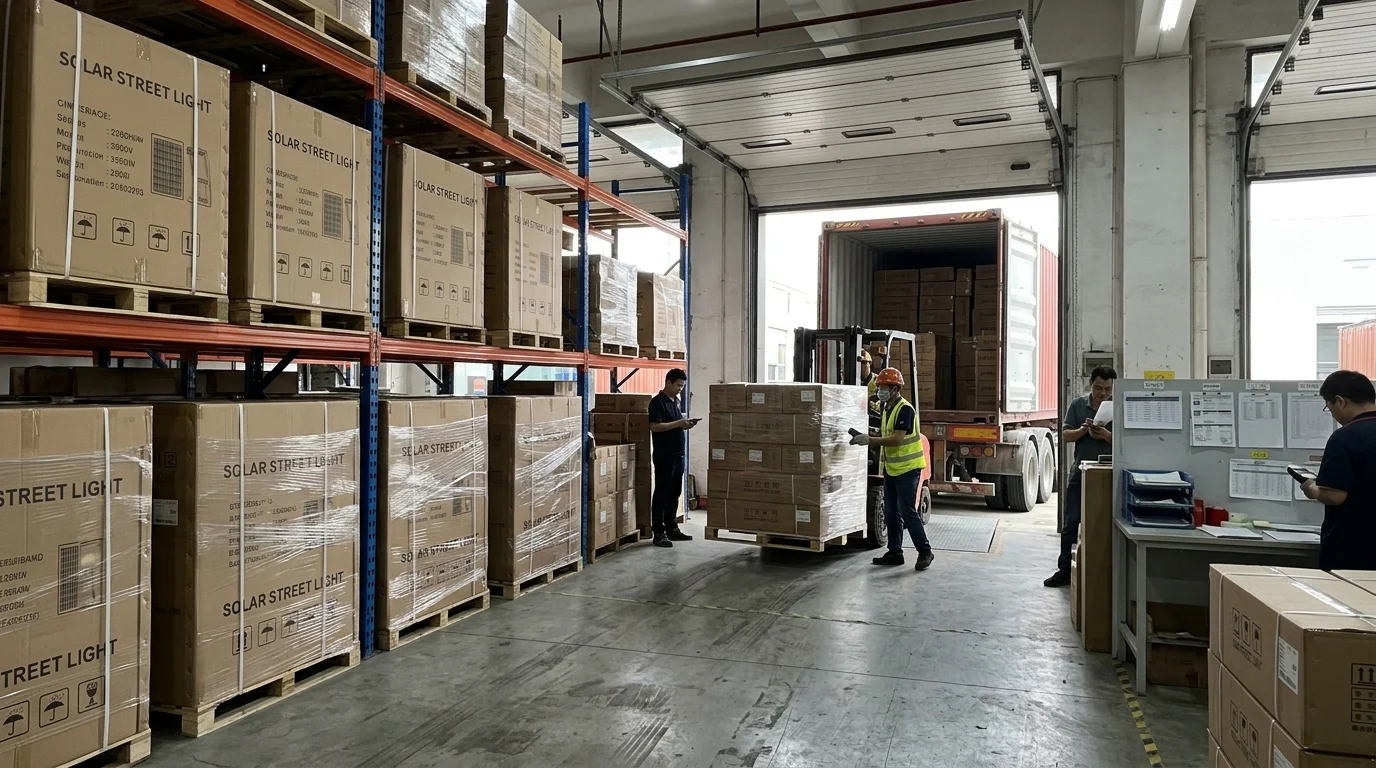
Factory vs Trading Company: What’s the Difference?
One of the first things buyers should verify is whether the supplier is a real factory or a trading company.
A real solar light manufacturer typically offers:
- In-house production lines
- OEM and ODM customization
- Product engineering support
- Better quality control
- Stable lead times
- Direct communication with production teams
Trading companies may offer lower communication barriers, but many do not control manufacturing directly. This can create problems with quality consistency, production scheduling, and after-sales service.
Before placing orders, buyers should ask for:
- Factory videos
- Production line photos
- Business licenses
- Certification documents
- Factory audit reports
- Real product testing reports
You can also request a video call to verify production capability and warehouse conditions.
Key Certifications to Check Before Ordering
Certifications are essential when importing solar lighting products into international markets.
Reliable manufacturers should provide both factory-level certifications and product compliance certifications.
Factory Certifications
The most common factory certification is:
- ISO 9001 Quality Management System
This certification indicates that the manufacturer follows standardized production and quality management procedures.
Product Certifications
Depending on your target market, common certifications include:
- CE Certification
- RoHS Certification
- FCC Certification
- UL Certification
- ETL Certification
For outdoor solar lights, buyers should also verify:
- IP65 or IP66 waterproof testing
- Battery safety reports
- LED performance reports
If a supplier cannot provide valid certification documents, buyers should proceed carefully.
How to Check Solar Light Quality
Product quality is one of the most important factors when choosing a long-term OEM supplier.
A reliable solar light manufacturer should use stable components and perform strict quality testing before shipment.
Battery Quality
Battery performance directly affects lighting runtime and product lifespan.
Most high-quality solar lights now use LiFePO4 batteries because they offer:
- Longer cycle life
- Better thermal stability
- Higher safety
- Improved outdoor durability
Buyers should avoid low-quality recycled batteries or unknown battery brands, which often lead to fast capacity loss and customer complaints.
Solar Panel Efficiency
Solar panel quality affects charging speed and energy conversion efficiency.
Monocrystalline solar panels are generally preferred because they perform better in outdoor environments and low-light conditions compared to cheaper polycrystalline panels.
Reliable suppliers should clearly provide:
- Solar panel wattage
- Conversion efficiency
- Charging time
- Battery capacity
Waterproof Testing
Outdoor solar lighting products must withstand rain, humidity, and changing weather conditions.
Most commercial-grade products should meet at least:
- IP65 waterproof standards
Reliable factories usually perform waterproof testing before mass production and during final quality inspection.
Buyers can request:
- Waterproof testing videos
- IP testing reports
- Outdoor installation references
LED Brightness and Lifespan
LED quality affects brightness, energy efficiency, and product lifespan.
High-quality solar lights should provide:
- Stable brightness output
- Low energy consumption
- Long LED lifespan
- Consistent color temperature
Factories should also conduct aging tests to reduce the risk of early electronic failures after shipment.
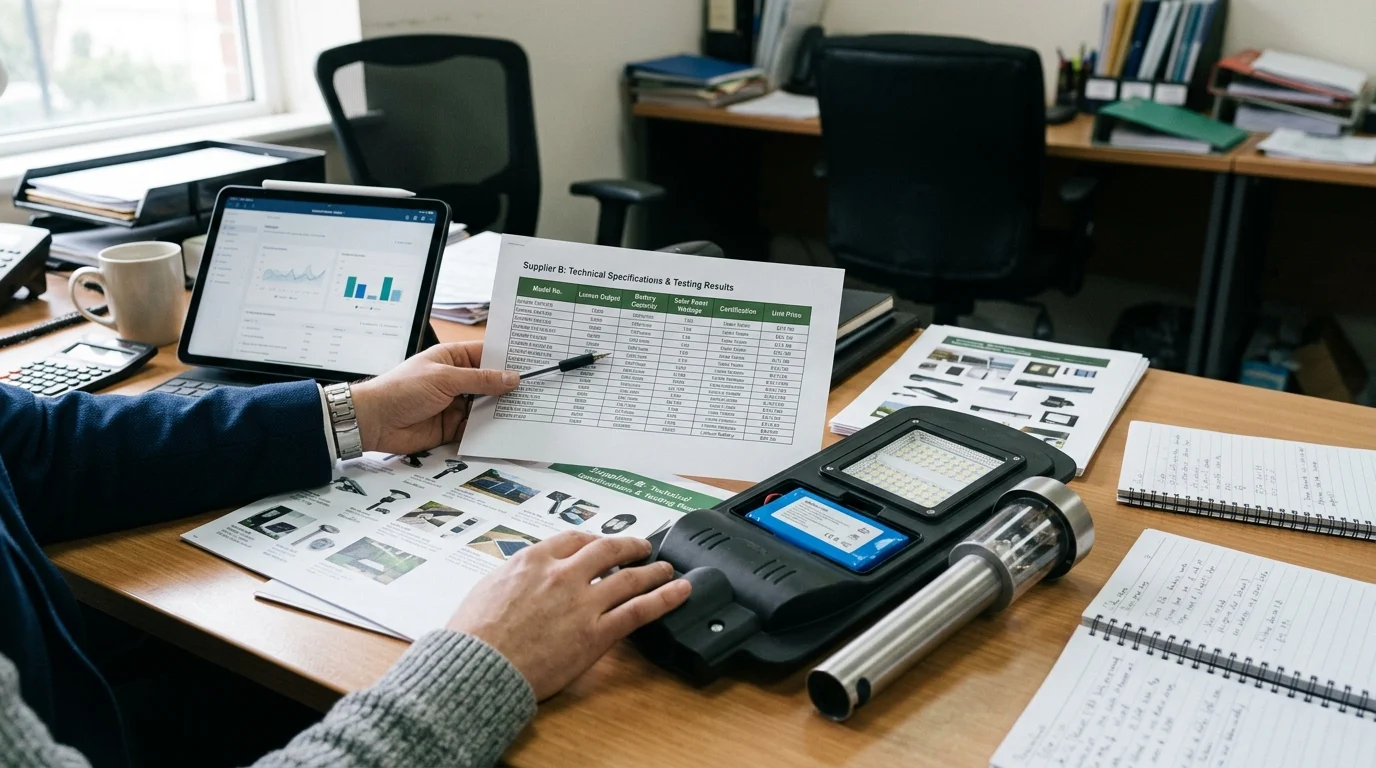
What Production Capacity Should a Factory Have?
Production capacity becomes especially important for wholesalers, distributors, and growing brands.
Before choosing a supplier, buyers should evaluate:
- Monthly production capacity
- Lead times
- Assembly line scale
- Warehouse management
- Packaging capability
- OEM customization support
For OEM projects, typical MOQ requirements may range from:
- 100–500 units for customized packaging or logo printing
Reliable factories should also provide realistic delivery schedules instead of overpromising short lead times.
Questions to Ask Before Placing a Bulk Order
Before confirming mass production, buyers should ask several important questions.
For example:
- Can you provide OEM packaging customization?
- What battery brand do you use?
- What waterproof level does the product support?
- What certifications are available?
- Can I see product testing reports?
- What is your standard lead time?
- What warranty do you provide?
- Can you support low MOQ trial orders?
- Do you perform aging tests before shipment?
- Can you provide factory audit reports?
Clear communication at the beginning often prevents future supply chain problems.
Red Flags to Avoid When Choosing a Supplier
Some warning signs may indicate unreliable suppliers.
Buyers should pay attention to:
- Extremely low pricing compared to market averages
- No factory photos or videos
- Unclear warranty policies
- Delayed communication
- Missing certifications
- Unrealistic production promises
- Poor sample quality
- Inconsistent quotations
A reliable OEM solar light factory should be transparent about product specifications, testing standards, and production capabilities.
Why Many Global Buyers Choose Chinese Solar Light Manufacturers
Chinese solar light manufacturers continue to play a major role in the global outdoor lighting industry because of:
- Mature supply chains
- Competitive production costs
- Strong OEM capabilities
- Fast production scaling
- Wide product selection
- Continuous product innovation
Many factories now offer advanced technologies such as:
- Motion sensor systems
- USB-C charging
- Smart lighting controls
- High-capacity LiFePO4 batteries
- High-efficiency LED systems
For brands looking to develop private-label outdoor lighting products, China remains one of the most competitive sourcing destinations worldwide.
Final Thoughts
Choosing a reliable solar light manufacturer in China is not only about price. Product quality, waterproof performance, battery stability, certifications, and delivery consistency all directly affect your customer satisfaction and business reputation.
Before placing bulk orders, buyers should always verify factory capabilities, review testing documents, inspect samples carefully, and communicate clearly about OEM requirements.
Long-term cooperation with a reliable manufacturing partner can help reduce return rates, improve product consistency, and support sustainable business growth.
If you are looking for OEM solar lighting solutions, feel free to contact our team for product catalogs, customization options, and factory information.
Post time: May-18-2026