
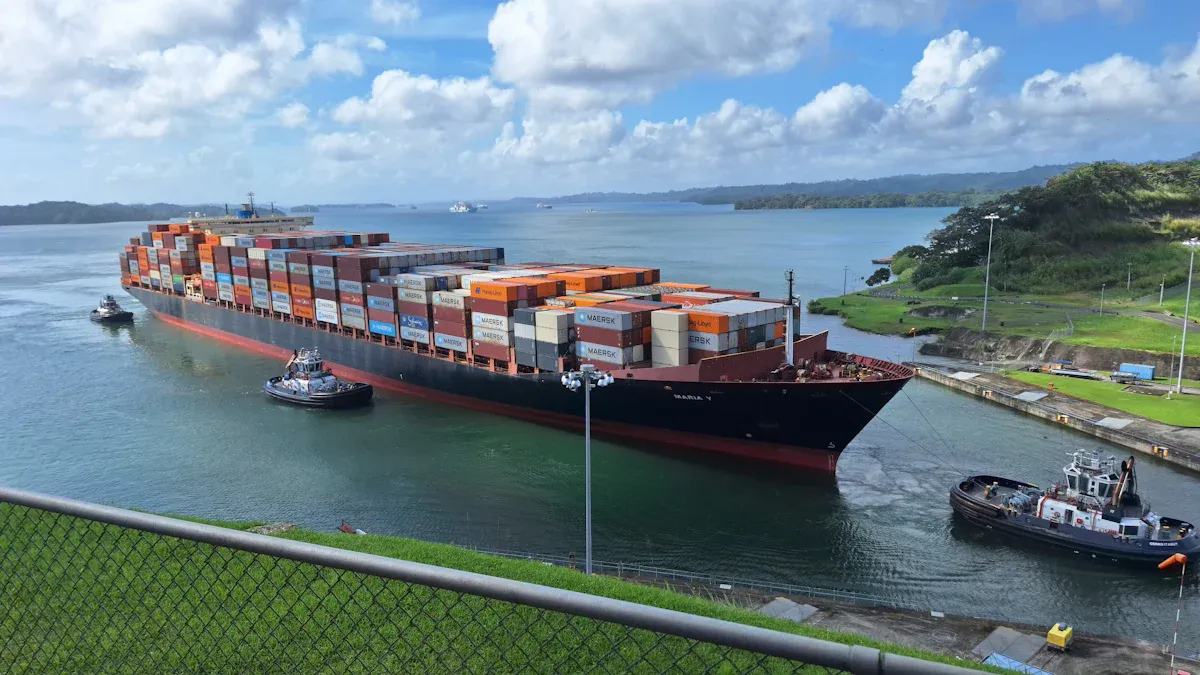
Importing string lights from China can be highly cost‑effective, but shipping costs often confuse small and mid‑size buyers. Freight is not a single fixed price — it is the result of multiple factors working together, including shipping method, Incoterms, cargo size, and destination charges.
In this guide, we break down how shipping costs for string lights are calculated, what fees you should expect, and how to avoid common cost traps — written specifically for independent brands, wholesalers, and Amazon sellers.
Key Takeaways
- Shipping costs depend on freight method, Incoterms, weight, volume, and destination fees
- Sea freight is cheaper for bulk orders; air freight is faster for urgent or small shipments
- Dimensional (volumetric) weight often matters more than actual weight for string lights
- Always request all‑inclusive quotes to avoid hidden charges
1. Choose the Right Shipping Method: Air vs. Sea Freight
Your first major cost decision is how you ship your string lights.
Sea Freight (Best for Bulk Orders)
Sea freight is the most economical option for medium to large shipments of LED string lights.
Typical transit times:
- China → US West Coast: 15–20 days
- China → US East Coast: 25–35 days
- China → Europe: 25–45 days
Best for:
- Large quantities
- Lower shipping cost per unit
- Non‑urgent inventory replenishment
Air Freight & Express Courier (Best for Speed)
Air freight and express services (DHL, FedEx, UPS) offer fast delivery at a higher cost.
Typical transit times:
- Air freight: 5–10 days
- Express courier: 3–7 days
Best for:
- Samples or trial orders
- Small, high‑value shipments
- Urgent Amazon restocks
Tip: Many buyers use air freight for first orders, then switch to sea freight once sales are stable.
2. Understand Incoterms: Who Pays for What?
Incoterms define cost and responsibility split between buyer and supplier. Choosing the right term directly affects your total landed cost.
Common Incoterms for String Light Imports
- EXW (Ex Works): Buyer pays almost everything — cheapest product price, but highest logistics complexity
- FOB (Free on Board): Supplier covers export costs; buyer controls main shipping
- CIF (Cost, Insurance & Freight): Supplier arranges sea freight; buyer handles destination costs
- DAP (Delivered at Place): Goods delivered to your address, excluding import duties
- DDP (Delivered Duty Paid): Supplier handles everything — simplest but usually higher total price
For most small importers, FOB offers the best balance of cost control and transparency.
3. Weight, Volume & Dimensional Weight (Very Important)
Shipping companies charge based on the higher of actual weight or dimensional weight.
How Dimensional Weight Is Calculated
Because string lights are often bulky but lightweight, dimensional weight frequently drives cost.
Example:
- Actual weight: 10 kg
- Carton size: 50 × 50 × 50 cm
- Dimensional weight: ~21 kg
You will be charged for 21 kg, not 10 kg.
Optimizing carton size and packaging can significantly reduce freight costs.
4. Breakdown of Shipping Cost Components
Shipping costs include more than just ocean or air freight.
Origin Charges (China Side)
- Factory → port transportation
- Export customs clearance
- Terminal handling charges
- Documentation fees
Main Freight Charges
- Ocean freight or air freight
- Fuel surcharges (BAF, LSS, Air Fuel Surcharge)
- Peak season surcharges
- General rate increases (GRI)
Destination Charges
- Import customs clearance
- Terminal handling fees
- Port or airport unloading
- Local delivery to warehouse
- Storage, demurrage, or detention (if delayed)
Customs Duties & Import Taxes
- Based on HS code classification
- Import duty rate varies by country
- VAT / GST calculated on product + freight + duty
Incorrect HS codes or undervaluation can cause delays and penalties.
5. How to Get Accurate Shipping Quotes
Provide Complete Product Details
- Product name & material
- HS code
- Carton size & weight
- Total quantity
Confirm Incoterms & Delivery Address
Always clearly state:
- Shipping Incoterm (FOB, CIF, DDP, etc.)
- Final delivery address (warehouse, Amazon FBA, 3PL)
Compare Multiple Freight Forwarders
Do not choose based on price alone. Evaluate:
- Cost transparency
- Experience with China exports
- Communication speed
- Tracking capability
Ask for All‑Inclusive Quotes
Request door‑to‑door pricing that includes:
- Freight
- Customs clearance
- Fuel surcharges
- Local delivery
- Insurance (if needed)
This prevents surprise fees later.
Final Thoughts
Calculating shipping costs for importing string lights from China requires understanding freight methods, Incoterms, dimensional weight, and hidden charges. With the right preparation, you can accurately estimate your landed cost and avoid budget surprises.
If you are sourcing LED string lights and want clear shipping options, flexible order quantities, and transparent pricing, working with an experienced supplier can make the process much easier.
FAQ
How can I reduce shipping costs for string lights from China?
Optimize packaging, ship larger volumes by sea, choose FOB terms, and compare multiple forwarder quotes.
Which Incoterm is best for beginners?
FOB is usually best for cost control; DDP is easiest if you prefer simplicity.
Why is dimensional weight important for LED string lights?
Because string lights are bulky, carriers often charge based on volume rather than actual weight, increasing costs if packaging is inefficient.
Post time: Jan-13-2026